

Success Of Root Canals in Sterling, VA
More than 41,000 root canals are performed every day in the United States.
Make appointmentSo, You’ve Heard the Words “Root Canal”… Let’s Talk About It Honestly
I know. Just hearing those two words can make your stomach drop. You’re probably picturing drills, pain, and a very long afternoon in a cold, sterile room. And honestly? I don’t blame you. That reputation has been around for decades.
But here’s a little secret from someone who does this every day: 95% of the time, the procedure of root canal is actually the easy part. The hard part? That’s the sleepless night you just had, holding a cold pack to your jaw and wondering if this pain will ever end.
We’re going to cut through the noise and the old scary stories. Let’s talk about what’s actually going on in your mouth, what to expect if you need this done, and—most importantly—how we’re going to make sure you feel safe and comfortable the entire time.
Do You Really Need One?
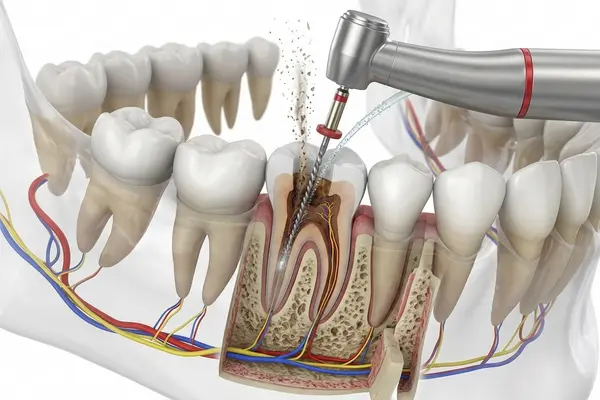
Think of the inside of your tooth like a little room. That room holds the “pulp”—the nerves and blood vessels that keep the tooth “alive.” When that room gets invaded by deep decay, a crack, or a nasty bump, it gets inflamed. Sometimes, that inflammation is just a little grumpy and settles down on its own.
Other times? It turns into a full-blown, irreversible infection. The nerve starts to die, bacteria throw a party, and an abscess (a pocket of infection) forms at the root. This is the throbbing, “please make it stop” pain. At this point, we have two choices:
- Extract the tooth and replace it with a prosthetic.
- Save the tooth with a root canal.
I know which one I’d choose for myself. Your natural tooth is a masterpiece of engineering. No implant or bridge feels exactly like it. Saving it isn’t just about vanity; it’s about keeping your bite aligned, your jawbone healthy, and preventing your other teeth from shifting into the gap.
The Warning Signs Your Tooth is Sending You
Your body is pretty good at waving red flags. Here is what we are listening for:
- A deep, gnawing toothache: Especially a sharp “zing” when you bite down.
- Hot & Cold Sensitivity: Not the quick twinge you get from ice cream, but a lingering ache that hangs around for minutes after the hot coffee or cold smoothie is gone.
- A “Shadow” on Your Tooth: If a tooth looks gray, dark, or discolored compared to its neighbors, the nerve inside might be dying.
- Swollen Gums: Tenderness or a little pimple-like bump on the gum near the tooth. That bump is actually a drainage tract for the infection.
- Silent Infections: Here’s the tricky part—sometimes there is no pain. The nerve dies quietly, and the infection only shows up on an X-ray. This is why I always remind my patients: regular checkups aren’t about nagging you; they’re about catching these silent issues before they become loud, painful emergencies.
What Actually Happens in the Chair?
I know you’re nervous. But I promise you, this isn’t the torture scene from a 1950s movie. With modern anesthetics, this process is typically as comfortable as getting a standard filling. You’ll be awake, relaxed, and (hopefully) bored enough to think about your grocery list. Here is the breakdown:
Comfort First
We start with a local anesthetic to thoroughly numb the tooth and surrounding gums. I will check to ensure you are completely numb before we do anything else. We are in this together, and your comfort is my priority.
Making a Doorway
I create a tiny opening in the top of the tooth. Think of it as a trapdoor to access the infected chamber below.
The Clean-Out
The infected and inflamed pulp is gently removed. I then meticulously clean and shape the empty canals, flushing out the bacteria. This is the “disinfection” phase, where we stop the infection in its tracks.
Sealing the Fortress
We fill those clean, empty canals with a safe, rubber-like material called gutta-percha. We seal it up with a temporary filling to protect it while it heals.
The Final Touch (A Few Days Later)
Because the tooth no longer has its nerve supply, it can become more brittle. I will usually recommend placing a crown (a custom cap) over the tooth. This protects it from cracking and restores your full chewing power.
Time commitment: Plan for about an hour to an hour and a half. Usually, it’s one to two appointments. That’s it.
Recovery: The “Take It Easy” Phase
Honestly, the “recovery” from a root canal is often easier than dealing with the toothache that brought you here.
After the anesthetic wears off, you’ll likely feel some soreness and tenderness. It’s more of a nuisance than real pain—like a deep bruise. Over-the-counter ibuprofen or Tylenol usually handles it beautifully.
Things to remember:
- Chew on the other side for a few days out of courtesy to the tender tissue.
- Keep brushing and flossing! The rest of your mouth still needs love.
- Call me if: The tenderness gets worse after a few days, you see significant swelling, or you notice a bad taste. These are rare, but if they happen, we need to make sure an extra layer of infection isn’t brewing.
With a proper crown and good home care, this tooth can stay with you for decades—sometimes a lifetime.
Our Dentists
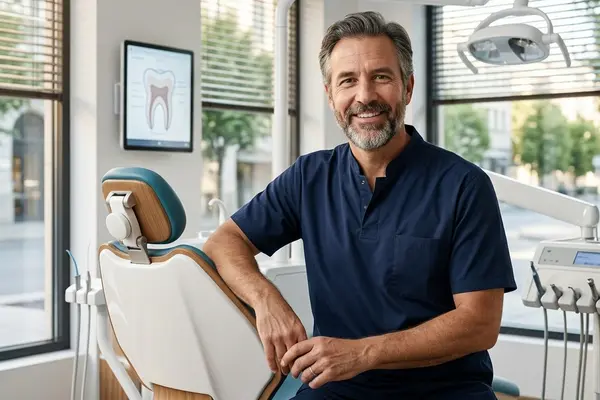
Dr. Robert Morgan, DMD
With a practice focused on comprehensive care, Dr. Robert Morgan, DMD specializes in complex restorations, esthetics, and dental implants, ensuring that each patient receives both functional excellence and a natural-looking smile.

Dr. Sarah Ward, DDS
With a DDS behind her name, Dr. Sarah Ward is a diagnostician and healer of the oral complex—from the enamel of the teeth to the soft tissues of the lips, gums, and jawbone. Her clinical philosophy is rooted in proactive care, specializing in the interception of decay and inflammation long before they compromise a patient’s smile.
Busting the Old Wives’ Tales
Let’s put some of these urban legends to bed, shall we?
Myth: “It’s going to hurt!”
Truth: The infection hurts. The root canal relieves that pain. With modern numbing, you’ll likely feel just pressure, not pain. Most patients are actually surprised at how comfortable it is.
Myth: “Why not just pull it?”
Truth: Because your jawbone needs that tooth! When a tooth is pulled, the bone underneath it starts to deteriorate, and the neighboring teeth drift into the gap. Keeping your natural tooth is nearly always the healthier, smarter choice for the long haul.
Myth: “It will make me sick.”
Truth: This is an old, debunked theory from the 1920s based on faulty science. There is zero credible evidence linking root canals to illness elsewhere in the body. It is a safe, effective procedure.
Myth: “I don’t feel pain, so I’m fine.”
Truth: If the nerve is dead, you won’t feel pain… but the infection is still there. It can be silently destroying the bone around your tooth. This is why X-rays are non-negotiable for good health!
What Our Patients Say
Financing and Insurance
During your in-person consultation, we’ll consider everything from your daily routine to your desired outcome and your financial situation to develop a strategy that’s tailored to you.
You won’t have to guess about costs. We’ll provide you with a transparent, detailed plan so you can move forward with complete clarity—no caveats, hidden clauses, or last-minute surprises. To make the investment easier, we offer flexible payment options tailored to your personal financial situation.
To make the most of our time, we recommend contacting your insurance company in advance. Bring this information with you to your appointment, and we’ll seamlessly incorporate it into your final plan.
✔️ We also partner with CareCredit to expand your payment options.
✔️ We work with major insurance companies like:
- Aetna
- Cigna
- Delta Dental
- Guardian
- MetLife
We’ll handle the complex work of verifying your insurance benefits before your visit. This way, you’ll arrive with a clear understanding of your financial and medical situation.
The Bottom Line
Look, I know coming to the dentist isn’t always at the top of your list of fun activities. But a root canal is a rescue mission. It’s how we stop the agony, eliminate the infection, and save your natural smile.
If you are in pain, or if you’re just worried about a shadow on an X-ray, please don’t wait. The longer we wait, the more the infection spreads.
Our team at Sterling Dentist is here to hold your hand (if you need it!), answer your questions, and walk you through every step. We don’t just treat teeth; we treat people. And we will always prioritize your comfort and peace of mind.
Ready to take the next step? Give us a call. Whether you are in excruciating pain or just need a check-up, we are here for you. Let’s get your smile back on track.
Contact Us Today
Address
46045 Palisade Pkwy, Sterling, VA 20165
Phone
703-703-9355
svvdmd@gmail.com
Opening Hours
- Mo-Fri 9:00 AM – 6:00 PM
- Sat 10:00 AM – 4:00 PM